
Developers are the gatekeepers of modern software systems. Their actions—whether human or AI-assisted—directly influence software security outcomes across the SDLC. By actively managing developer security posture, organizations can reduce risks, ensure governance, and establish a development process deeply rooted in security principles.
Developer Security Posture Management (DevSPM) is the first system of record linking scan results to developer identity and AI activity, complementing and strengthening ASPM and CNAPP with developer-aware security. DevSPM enables organizations to:
Trace scan results to specific developers and AI agents;
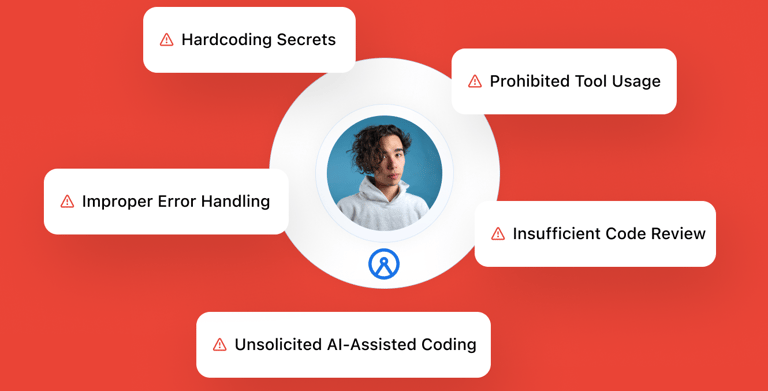
Monitor security risks introduced by developer actions;
Govern developer and CI/CD tool usage across the SDLC;
Generate audit-ready records tied to developer identity and actions.
These capabilities offer a comprehensive pathway for organizations to align developer practices with robust security policies, ensuring a secure and compliant software development process.
Managing developer security posture requires visibility into how vulnerabilities are introduced during the software development lifecycle—who made the change, what action occurred, and how risk entered the codebase. These risks often result from a mix of human mistakes, poor security habits, and sophisticated cyberattacks. Without effective risk management strategies, such issues can lead to exploitable flaws and hinder compliance efforts.
For example, insider threats—whether from malicious intent or compromised accounts—can lead to stolen code, embedded vulnerabilities, or unauthorized data exposure. Without developer-aware visibility, organizations struggle to address:
Insider threats tied to compromised developer credentials
Shadow IT introduced through unapproved tools and environments
Risky behaviors such as insecure AI-generated code or unverified dependencies
DevSPM links these risks directly to developer actions, enabling faster triage, clearer accountability, and more effective remediation.
Real-world incidents continue to demonstrate the impact of unmanaged developer actions and weak visibility into developer security posture—reinforcing the need for Developer Security Posture Management as part of a broader security strategy:
Insider Threats and Identity Oversight, Uber Breach (2022): An attacker exploited compromised developer credentials to infiltrate Uber’s systems, exposing sensitive user and driver data. This breach highlighted critical gaps in access and identity management.
AI Code Vulnerabilities, GitHub Copilot Security Issue (2024): Research revealed that GitHub Copilot’s AI occasionally suggested insecure code snippets prone to vulnerabilities like SQL injection and XSS when working with flawed codebases.
Archipelo supports Developer Security Posture Management by creating a historical record of coding events across the SDLC tied to developer identity and actions—embedding security into every stage of development.
Key Features of Archipelo Capabilities:
Developer Vulnerability Attribution: Trace CVE scan results to the developers and AI agents who introduced them.
Automated Developer & CI/CD Tool Governance: Scan developer and CI/CD tools to verify tool inventory and mitigate shadow IT risks.
AI Code Usage & Risk Monitor: Monitor AI code tool usage to ensure
secure and responsible software development.
Developer Security Posture: Monitor security risks of developer actions and generate insights into individual and team security posture.
Through these capabilities, Archipelo empowers organizations to strengthen their SDLC, reduce insider threats, and improve software security.
Ignoring developer security posture creates ongoing risk across the SDLC—from ungoverned tools and insecure AI usage to vulnerabilities with no clear owner.
Developer Security Posture Management makes developers observable—human and AI—so organizations can address root cause, not just patch symptoms.
Contact us to learn more about how Archipelo can help your team integrate security into development and align with DevSecOps best practices.